
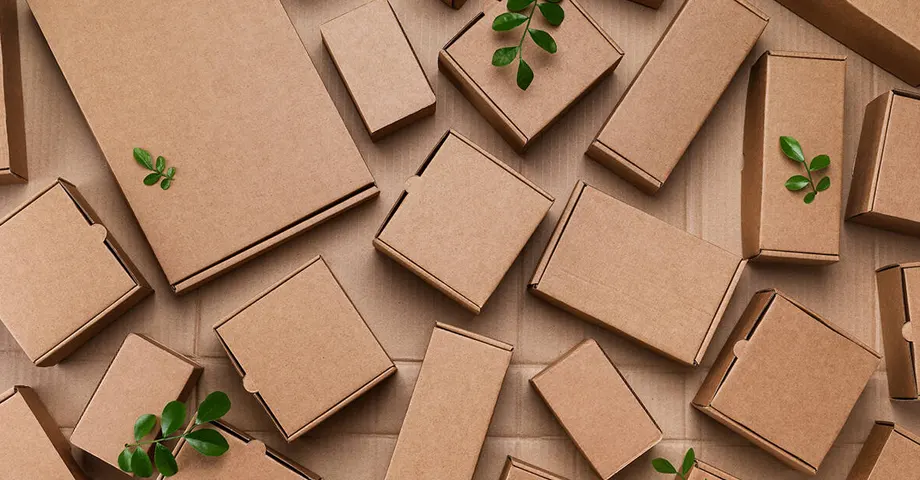
Sustainable packaging is no longer a trend discussed in boardrooms, it is a business necessity driven by consumers, regulations, and market economics. Companies that ignore this shift are already losing relevance, while brands that adopt eco-friendly packaging are building long-term trust, cutting costs, and strengthening their market position.
Businesses today are under pressure from two sides. On one side, customers are demanding environmentally responsible products. On the other hand, governments are tightening regulations on plastic waste, carbon emissions, and packaging disposal. The result is simple: packaging is no longer just about protection and branding; it is about responsibility.
This is exactly where Devendra Box Packaging and forward-thinking manufacturers are helping brands transition toward smarter, sustainable packaging solutions without compromising quality or durability.
Sustainable packaging refers to packaging materials and designs that:
This includes corrugated boxes, duplex boxes, kraft paper packaging, recyclable cartons, and biodegradable alternatives to plastic.
It is not about making packaging weak or unattractive. It is about engineering packaging that performs better while harming the environment less.
Modern consumers actively check whether a brand uses eco-friendly packaging. Studies show that buyers are willing to pay more for products packed in recyclable or biodegradable materials. For eCommerce brands especially, packaging is often the first physical interaction a customer has with the brand.
Plastic-heavy packaging signals irresponsibility. Paper-based sustainable packaging signals trust.
India and many other countries are imposing strict bans and penalties on single-use plastics and non-recyclable packaging. Brands that fail to comply will face fines, legal issues, and supply chain disruptions.
Switching to sustainable packaging today prevents regulatory problems tomorrow.
Many businesses assume sustainable packaging is expensive. That assumption is outdated.
Corrugated boxes, duplex boards, and kraft packaging:
In reality, sustainable packaging often lowers overall logistics and production costs when designed properly.
Sustainability is a powerful marketing advantage. Brands using eco-friendly packaging can confidently communicate their responsibility through labels, websites, and marketing campaigns.
This improves:
Packaging itself becomes a silent marketing tool.
With the rapid growth of eCommerce, packaging demand has increased massively. Traditional plastic packaging is not viable for high-volume shipping.
Corrugated and paper-based sustainable packaging offers:
This is why most leading eCommerce brands are moving toward paper-based packaging solutions.
Strong, lightweight, and 100% recyclable. Ideal for shipping, storage, and eCommerce packaging.
Used for premium retail packaging. Printable, recyclable, and durable.
Biodegradable and cost-effective. Widely used for eco-conscious brands.
Offer moisture resistance without compromising recyclability.
These materials provide both performance and environmental responsibility.
Instead of “use and throw,” sustainable packaging follows the reuse–recycle–reproduce cycle.
This is not just good for the planet, it ensures long-term availability of raw materials for the packaging industry.
Many sectors are aggressively adopting eco-friendly packaging:
These industries require large-scale packaging. Switching to sustainable materials drastically reduces environmental impact.
Sustainable packaging is not only about materials but also about smarter design.
Optimized box sizes, lightweight boards, and stackable cartons:
Better packaging design directly improves supply chain efficiency.
The global packaging industry is shifting from plastic to paper. The reason is simple:
Paper-based packaging is renewable, recyclable, biodegradable, and cost-effective.
Businesses that adopt this shift early will have a competitive edge as the market fully transitions in the next few years.
Sustainable packaging requires expertise. Poorly designed eco-friendly packaging can lead to:
An experienced packaging manufacturer ensures:
This is where manufacturers like Devendra Box Packaging play a crucial role in helping brands transition smoothly.
Sustainable packaging is not an option for the future, it is the standard for the present. Customers expect it. Governments demand it. Markets reward it.
Businesses that continue using outdated packaging methods will gradually lose relevance, face regulatory issues, and incur higher costs. On the other hand, companies adopting eco-friendly packaging are building stronger brands, cutting expenses, and contributing to environmental responsibility.
The shift has already begun. The only question is whether your business will lead the change or struggle to catch up later.
Sustainable packaging is not just good for the planet.
It is smart business.